
Kitchen Countertop Installation Fort Collins, CO
From laminate to stone, what to expect from templating through final install
Material choice drives almost everything about kitchen countertop installation, more than any other single decision in the process. Laminate installs in a day and costs a fraction of stone. Granite and quartz need a template of the exact kitchen cut before a slab ever gets fabricated, then a professional crew to lift and set pieces that can weigh several hundred pounds each. The material picked at the very start of the project determines the timeline, the cost, and who’s actually capable of doing the installation.
Kitchen Countertop Installation Cost by Material
Cost for kitchen countertop installation varies more by material than by almost anything else in the project. Laminate runs $10 to $40 per square foot installed, the most affordable option by a wide margin. Granite typically runs $45 to $175 per square foot, and quartz runs $50 to $150 per square foot, with both overlapping heavily depending on grade and edge style. Marble and quartzite sit at the top end, often $65 to $250 per square foot. For a typical kitchen with 30 to 50 square feet of counter space, total installed cost usually falls somewhere between $2,500 and $7,000 depending on which material gets chosen.
Can You Install Your Own Countertops?
Whether kitchen countertop installation is realistic as a DIY project depends entirely on the material. Laminate and butcher block are genuinely doable for a handy homeowner, since both are relatively lightweight and forgiving of small errors. Granite, quartz, and other natural or engineered stone are a different story, slabs weigh several hundred pounds, cutting them requires specialized equipment, and a mistake during fabrication means an expensive slab is ruined. Most homeowners who DIY a countertop are working with laminate, not stone.
Templating and Fabrication
Stone kitchen countertop installation starts with a template, not a slab, a precise measurement of the kitchen’s exact layout, including every corner, cutout, and appliance gap, taken after cabinets are installed but before any stone gets cut. That template gets sent to a fabrication shop, where the actual slab is cut, polished, and finished with the chosen edge profile before it’s ever brought to the house. Skipping or rushing the templating step is one of the most common reasons a countertop doesn’t fit correctly on install day.
Do Big Box Stores Install Countertops?
Big box stores do offer kitchen countertop installation, typically templating and fabricating through a local partner installer rather than an in-house crew. That can work fine for a straightforward job, but it usually means less direct contact with the actual people cutting and installing the stone, and scheduling runs through a corporate process rather than one point of contact. A local specialist handling both the material sourcing and the installation directly tends to move faster and gives a homeowner one person to call if anything needs adjusting after the fact.
How Long Countertops Need to Cure After Installation
Most kitchen countertop installation jobs are technically finished on install day, but the seams, caulk, and any sealant applied still need time to fully cure. Light use is generally fine within a few hours, but heavy use, leaning weight on a seam, exposing new caulk to water, is worth avoiding for 24 to 48 hours while everything sets up completely. Stone that’s been sealed also needs that sealant to cure before it’s wiped down with anything beyond a dry cloth, since cleaning too soon can pull the sealer right back off.
Removing Old Countertops
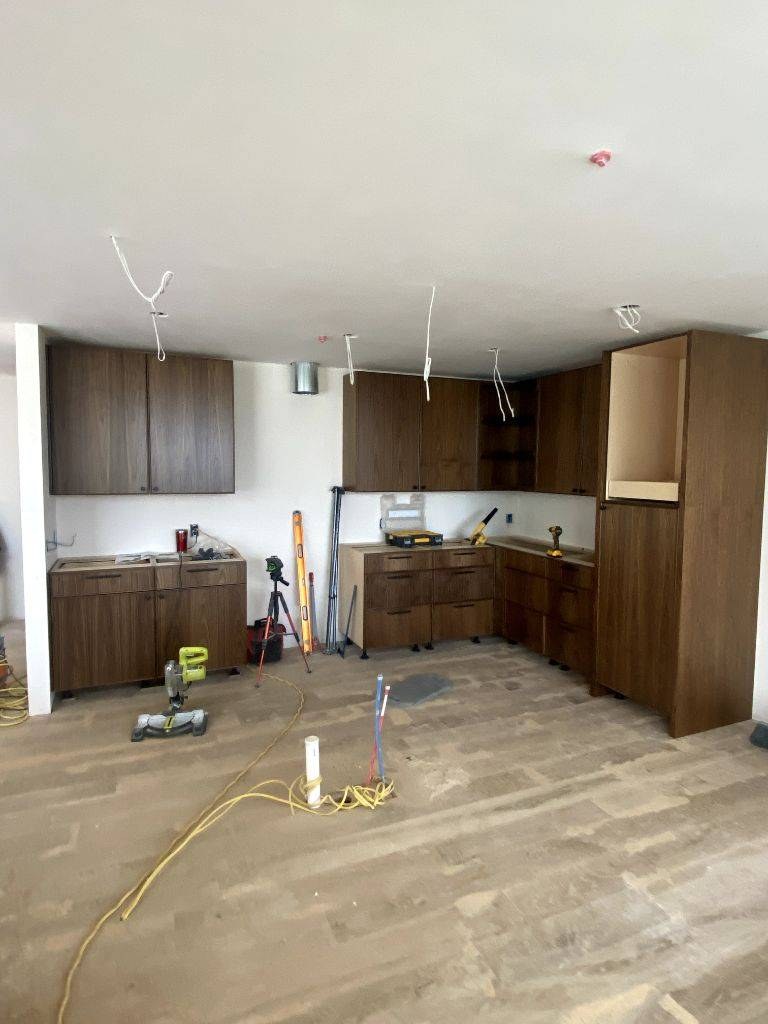
Removing what’s already there is the first real step in kitchen countertop installation, and it’s more involved than it looks depending on how the old countertop was attached. Older countertops are sometimes glued directly to the cabinets below, which can mean some cabinet surface damage during removal that needs patching before the new countertop goes on. Plumbing for the sink and any built in appliances like a cooktop need to be disconnected properly before removal starts, not afterward, to avoid a surprise leak or damaged fixture.
Choosing the Right Material for Your Kitchen
Picking a material for kitchen countertop installation comes down to balancing budget, durability, and how much maintenance a homeowner actually wants to keep up with. Quartz requires no sealing and resists stains better than almost any other option, which is part of why it’s become the most requested material for new installations. Granite offers natural variation no engineered material fully replicates, but needs periodic resealing to stay stain resistant. Laminate and butcher block cost far less upfront but show wear, scratches and heat damage on laminate, cutting marks and water spotting on butcher block, sooner than stone does.
Curious what else falls under kitchen work? Check out our full Kitchen Remodeler services.
Whatever material fits your kitchen and your budget, get in touch and we’ll handle the templating, fabrication, and installation from start to finish.
OUR SERVICES
Expert Basement Finishing & Remodeling in Fort Collins
Basement Finishing
Raw basement space doesn’t have to sit empty. Insulation, flooring, lighting, and layout come together to create a bedroom, office, or hangout space that actually adds value to your home.
Basement Remodeling
Already finished but feeling dated? A basement remodel updates the layout and finishes to fit how your family uses the space now, whether that’s a home theater, guest suite, or workout room.
Home Remodeling
Single room refresh or full house renovation, home remodeling gets handled with the same craftsmanship and attention to detail either way, with every project accounting for the quirks of Fort Collins area homes.
Bathroom Remodeling
A guest bath update or a full primary bathroom teardown, bathroom remodeling blends style with the plumbing, tile, and ventilation work that actually holds up over time.
Kitchen Remodeling
New cabinets and counters or a full layout change, kitchen remodeling gets built around how your household actually cooks and gathers, not just what looks good in photos.
ADU Construction
Need a separate living space for family, a rental, or extra income? From detached backyard units to garage and basement conversions, built to the city’s current zoning rules.
Home Addition Construction
Add a bedroom, sunroom, or office without it looking bolted on. Home additions take structural planning and design work that matches your existing home, not just extra square footage.
Apartment Renovation
Small spaces need smart design more than big ones do. Apartment renovation covers everything from a kitchen refresh to a full overhaul, built around making a compact layout work harder.
Deck Construction
Deck construction for Fort Collins weather holds up through hot summers and heavy snow loads alike. Materials and construction get chosen for the Front Range climate, not just how it looks on day one.
The Horsetooth Difference
A Network, Not a Guess
Every contractor we work with gets picked for a track record of solid, reliable work, not just availability. That vetting happens before you ever get connected, not after something goes wrong.
Built Around How You Live
Your project should fit your household, not a template. Layout, materials, and design decisions get shaped by how you actually use the space, not what photographs well.
Work That Holds Up
A finished project should still look right five years from now, not just on move in day. Craftsmanship gets judged by how it holds up to daily use, not how it looks in the first photo.
No Guessing Where Things Stand
You shouldn’t have to chase down updates during your own remodel. Clear timelines and regular check ins keep you informed without you having to ask.
Materials Chosen for This Climate
Colorado’s dry air and big seasonal swings are hard on the wrong materials. What gets used in your project is chosen to hold up here, not just wherever it happened to be manufactured.
Your Project, Start to Finish
From the first phone call to the final walkthrough, the goal is a result you’re actually happy with, not just a checked box. That’s the standard the whole way through.
OUR PROCESS
How Horsetooth Gets Your Project Started
Tell Us What You're Working On
Give us the details, the type of project, your rough budget, and when you want to start. The more specific you are, the faster we can find the right match.
We Match You With a Contractor Who Fits
No generic list of names. We connect you with a contractor from our network whose experience and typical project scope actually line up with what you’re planning.
Get a Real Estimate and Timeline
Your matched contractor walks the project with you and gives you honest numbers and a realistic schedule, not a rough guess meant to get a signature.
Permits and Scheduling Get Handled
Your contractor takes care of Fort Collins permitting and lines up a start date, so you’re not the one chasing down paperwork or guessing at code requirements.
Work Gets Done, With Updates Along the Way
You’re not left wondering what’s happening. Your contractor keeps you informed as the project moves from framing to finishes.
Final Walkthrough
Before the job is called done, you walk through the finished space together and confirm everything matches what was promised at the start.
TOP-RATED FORT COLLINS HOME REMODELING
Client Testimonial
5.0
Horsetooth Remodeling & Basement Finishing
FREQUENTLY ASKED QUESTIONS
Cost depends heavily on material. Laminate runs $10 to $40 per square foot installed, granite typically runs $45 to $175 per square foot, and quartz runs $50 to $150 per square foot. For a typical kitchen with 30 to 50 square feet of counter space, total installed cost usually falls between $2,500 and $7,000.
It depends on the material. Laminate and butcher block are realistic DIY projects for a handy homeowner. Stone countertops, granite, quartz, and similar materials, are a different story, slabs weigh several hundred pounds and require specialized cutting equipment, which is why almost all stone installations are handled by a professional fabricator.
Yes, big box stores typically offer countertop installation through a local partner installer rather than an in-house crew. It can work for a straightforward job, though scheduling runs through a corporate process, and a homeowner has less direct contact with the people actually doing the work compared to hiring a local specialist directly.
Light use is generally fine within a few hours of installation, but heavy use, especially near seams or new caulk, is worth avoiding for 24 to 48 hours while everything fully cures. Sealed stone also needs that sealant to cure before it's cleaned with anything beyond a dry cloth.